


Liability Insurance Australia :: News
SHARE

Share this news item!

What the Insurance Code Rewrite Means for Shop Claims

Retailers should watch claims, complaint handling and accountability standards as ASIC considers the new code

What the Insurance Code Rewrite Means for Shop Claims?w=400

The information on this website is general in nature and does not take into account your objectives, financial situation, or needs. Consider seeking personal advice from a licensed adviser before acting on any information.

Australia’s proposed overhaul of the General Insurance Code of Practice has moved from consultation to regulator review, with the Insurance Council of Australia lodging a strengthened code with ASIC on 22 October 2026.
For shop owners, this is not an instant change to policy terms, but it is a significant development in how insurers may be expected to handle claims, complaints, vulnerability and customer communication in the next phase of the market.

The most important point is timing. The revised code still needs to be considered by ASIC, and a transition period is expected before any approved version begins applying to new and renewed policies. That means retailers should not assume current claims will be handled under the new framework. Existing policy wording, insurer obligations and dispute processes remain the starting point.

Even so, the direction of travel matters. The proposed code is intended to lift standards around transparency, accountability and claims handling. It would also make key code obligations contractually enforceable for the first time, subject to the final approved form. That could give customers stronger avenues to hold insurers to service commitments, although the practical effect will depend on ASIC’s approval, implementation details and how insurers embed the changes operationally.

The development lands against a difficult complaints backdrop. AFCA’s 2025-26 annual review recorded the highest overall complaint volume since its establishment, while general insurance complaints also reached a new high. AFCA’s small business data also showed continued complaints involving insurers and insurance brokers, including matters connected with business property, business interruption and service. For retailers, those are not abstract categories; they are the kinds of issues that arise after fire, storm, theft, equipment damage or a prolonged interruption to trading.

There is also some caution. Consumer groups have argued the submitted code may still fall short in areas such as claims handling and expert evidence, and have called for further scrutiny before approval. That debate is worth following because retail claims often rely on loss assessors, builders, repairers, stock valuation evidence and business interruption calculations. Small differences in process can materially affect how quickly a claim is understood and resolved.

For shop owners reviewing cover, the practical lesson is to treat governance reform and policy review as connected but separate. A stronger code may improve standards over time, but it will not replace careful reading of policy documents, sums insured, exclusions, sub-limits and evidence requirements. Clear records of stock, fit-out, turnover, maintenance, incident response and correspondence can still make a major difference if claim disputes emerge.

The code process should ultimately be judged by what changes for customers during stressful claims, not simply by the wording submitted to the regulator. For Australian retailers, the immediate value is a reminder to keep insurance administration current, document risk controls and understand how a policy is meant to respond before a loss occurs.

Published:Thursday, 29th Oct 2026
Author: Paige Estritori

Please Note: We do not endorse any specific products or companies. Some content is sourced from third parties, including press releases, and may not be independently verified for accuracy or completeness.

Share this news item:

Rate this article

0 Comments

No comments yet. Be the first to share your thoughts.

Insurance News

What Rising Insurance Disputes Mean for Income Protection Customers
29 Oct 2026: Paige Estritori
New Zealand’s latest insurance dispute figures are a timely warning for anyone relying on personal cover to protect their household income. The Insurance & Financial Services Ombudsman Scheme reported that, for the year ended 30 June 2026, health insurance became the largest category of disputes it investigated for the first time, with health disputes up 91 percent and 833 dispute investigations completed across all categories. - read more
Crash Data Shows Where Truck Risk Is Shifting
29 Oct 2026: Paige Estritori
The 2026 National Truck Accident Research Centre major incident report gives Australian truck operators a useful, if challenging, snapshot of where serious heavy vehicle risk is changing. Released in October 2026 and based on de-identified NTI-insured heavy vehicle major-loss claims, the report points to progress on distraction and fatigue, while also highlighting renewed concern about inappropriate speed and following distance. - read more
Delayed Small Business Insurance Inquiry Keeps Cover Concerns on the Agenda
29 Oct 2026: Paige Estritori
A federal parliamentary inquiry into small business insurance has pushed back its reporting timetable, extending the wait for recommendations on insurance affordability, availability and regulation. Insurance News reported on 27 October 2026 that the inquiry, which had been expected to report that day, now intends to table its final report by 26 February 2027 after receiving extensive evidence from across the market. - read more
What the Insurance Code Rewrite Means for Shop Claims
29 Oct 2026: Paige Estritori
Australia’s proposed overhaul of the General Insurance Code of Practice has moved from consultation to regulator review, with the Insurance Council of Australia lodging a strengthened code with ASIC on 22 October 2026. For shop owners, this is not an instant change to policy terms, but it is a significant development in how insurers may be expected to handle claims, complaints, vulnerability and customer communication in the next phase of the market. - read more
Why the SME Cyber Insurance Gap Is Becoming Harder to Ignore
29 Oct 2026: Paige Estritori
New research from specialist insurer CFC, reported on 26 October 2026, has put a sharper number on a problem many Australian small businesses already sense: cyber risk is moving faster than insurance take-up. CFC’s local findings indicate seven in 10 Australian SMEs surveyed experienced a cyber incident in the past three years, while standalone cyber policy uptake is still estimated at only 10% to 15%. - read more


Business Insurance Articles

Professional Indemnity Insurance in Australia: What It Covers and Who It Is For
Professional indemnity insurance can help protect Australian professionals, consultants and service-based businesses against claims arising from alleged mistakes, negligence or breaches of professional duty. This guide explains what it commonly covers, how it differs from public liability insurance, and which professionals often consider it. - read more
Understanding The Costs: How Much Does Public Liability Insurance Typically Cost?
Public liability insurance is a crucial form of protection for both businesses and individuals, safeguarding them against potential claims for personal injury or property damage that occur as a result of their operations or services. In an increasingly litigious society, having this coverage can mean the difference between staying afloat financially and facing business closure due to unexpected claims. - read more
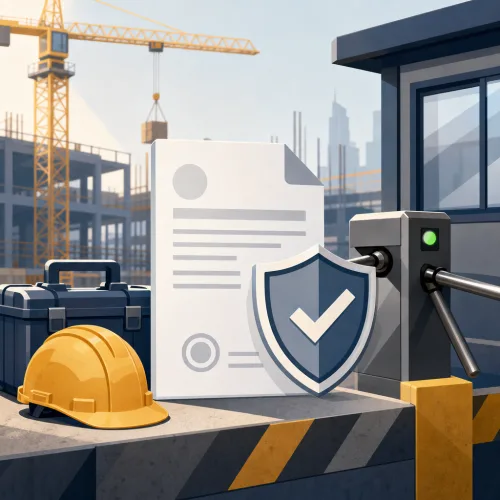
Certificates of Currency for Liability Insurance: What Australian Contractors Should Know
A certificate of currency is commonly requested by clients, principals, site managers and tender panels as proof that a contractor's liability insurance is current. Here's what it usually shows, what it does not prove, and what Australian contractors should check before submitting one. - read more
Public Liability Insurance for Events in Australia: What Organisers Should Consider
Public liability insurance can help protect event organisers from the financial impact of third-party injury or property damage claims. In Australia, venues and councils may ask for proof of cover before an event can proceed, so it is important to understand how this insurance works and what to consider when arranging it. - read more
Reducing Your Risks: Public Liability Coverage Tips for Trade Professionals
For tradesmen and trade professionals, venturing into the world of business comes with its set of challenges and risks. Among the myriad of precautions to consider, one critical safeguard stands out for its ability to protect both the tradesperson and their clients: Public Liability Insurance. This form of coverage is not just a safety net; it is a cornerstone of a responsible business practice within the trade industry. - read more


Start Here !

Start here!

Cover Amount:
Postcode:
All quotes are provided obligation-free by a participating broker from our national referral partner network. We respect your Privacy.

Knowledgebase
Actuary:
A professional who analyzes the financial costs of risk and uncertainty using mathematics, statistics, and financial theory.